2026-05-11
Горячий горшок (хот-пот) любят во всем мире, но не все его виды одинаковы. Два самых популярных стиля — это японский и китайский хот-пот. Хотя в обоих случаях еда готовится прямо за столом, впечатления от трапезы совершенно разные.
Если вы планируете открыть ресторан или ищете подходящее решение, стол для горячих горшков Понимание этих различий поможет вам выбрать подходящее оборудование, основу для супа и стиль ресторана для ваших клиентов.
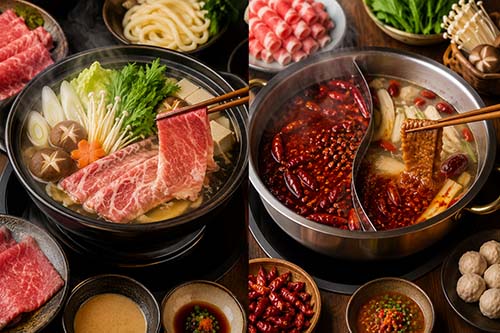
Японский хот-пот обычно отличается более легким и нежным вкусом. Основное внимание уделяется свежим ингредиентам, чистому бульону и простым способам приготовления.
К популярным японским стилям приготовления хот-пота относятся:
В японских ресторанах, специализирующихся на хот-поте, посетители часто готовят тонкие ломтики говядины, овощи, тофу, морепродукты и лапшу в нежном бульоне. Соусы обычно простые, например, кунжутный соус или соус понзу.
Атмосфера здесь часто тихая, чистая и минималистичная.
Многие японские рестораны выбирают встроенные индукционные плиты. стол для горячих горшков дизайнерские решения, потому что они выглядят современно, экономят место и создают чистую обеденную зону.
Китайский хот-пот славится насыщенным вкусом и оживленной атмосферой за столом. Зачастую он более социальный и располагающий к общению, чем японский хот-пот.
К популярным видам китайского хот-пота относятся:
В китайском хот-поте обычно более насыщенный вкус бульона, больший выбор ингредиентов и больше соусов для макания. Посетители часто предпочитают острые бульоны с чили, черным перцем и богатыми специями.
В ресторанах также уделяется большое внимание вентиляции, поскольку сильный аромат горячего супа и пар могут быстро заполнить обеденный зал.
Многие китайские рестораны используют индивидуальные решения. стол для горячих горшков Решения со встроенными индукционными плитами и системами бездымного охлаждения для повышения комфорта клиентов.
Оба стиля популярны, но лучший выбор зависит от вашей целевой аудитории и концепции ресторана.
Японский хот-пот хорошо подходит для:
Китайский хот-пот хорошо подходит для:
Какой бы стиль вы ни выбрали, правильный стол для горячих горшков Это может улучшить как качество обслуживания клиентов, так и эффективность работы ресторана.
И японский, и китайский хот-пот предлагают уникальные гастрономические впечатления. Японский хот-пот ориентирован на простоту и свежесть продуктов, в то время как китайский хот-пот отличается насыщенным вкусом и оживленной атмосферой.
Если вы планируете открыть ресторан, где подают горячие блюда в горшочках, важно выбрать правильный стиль и подходящую подачу. стол для горячих горшков Правильно настроенный персонал может помочь создать более комфортные условия для ваших клиентов и улучшить работу ресторана.
Независимо от того, предпочитаете ли вы японскую элегантность или острые китайские блюда, высококачественное оборудование для приготовления хот-пота играет важную роль в успехе ресторана.

Если вы ищете горячий горшок и барбекю оборудование для вашего ресторана, то вы пришли в нужное место. Мы имеем над несколькими летами профессионального опыта в горячей плите индукции бака и техниках гриля барбекю и наши продукты получили много национальных патентов в настоящее время.
5F,Block16,Phase3,Tianfulai International Industrial City,Ronggui Town,Foshan City, Guangdong,CHINA.
Тель :
+86 13380500833Отправить по электронной почте :
gl.zhang@cenhot.comчитайте дальше, оставайтесь в курсе, подписывайтесь, и мы приветствуем вас, чтобы рассказать нам, что вы думаете.



Авторское право © 2015-2026 Cenhot Catering Development Co.,Ltd..Все права защищены.



 gl.zhang@cenhot.com